
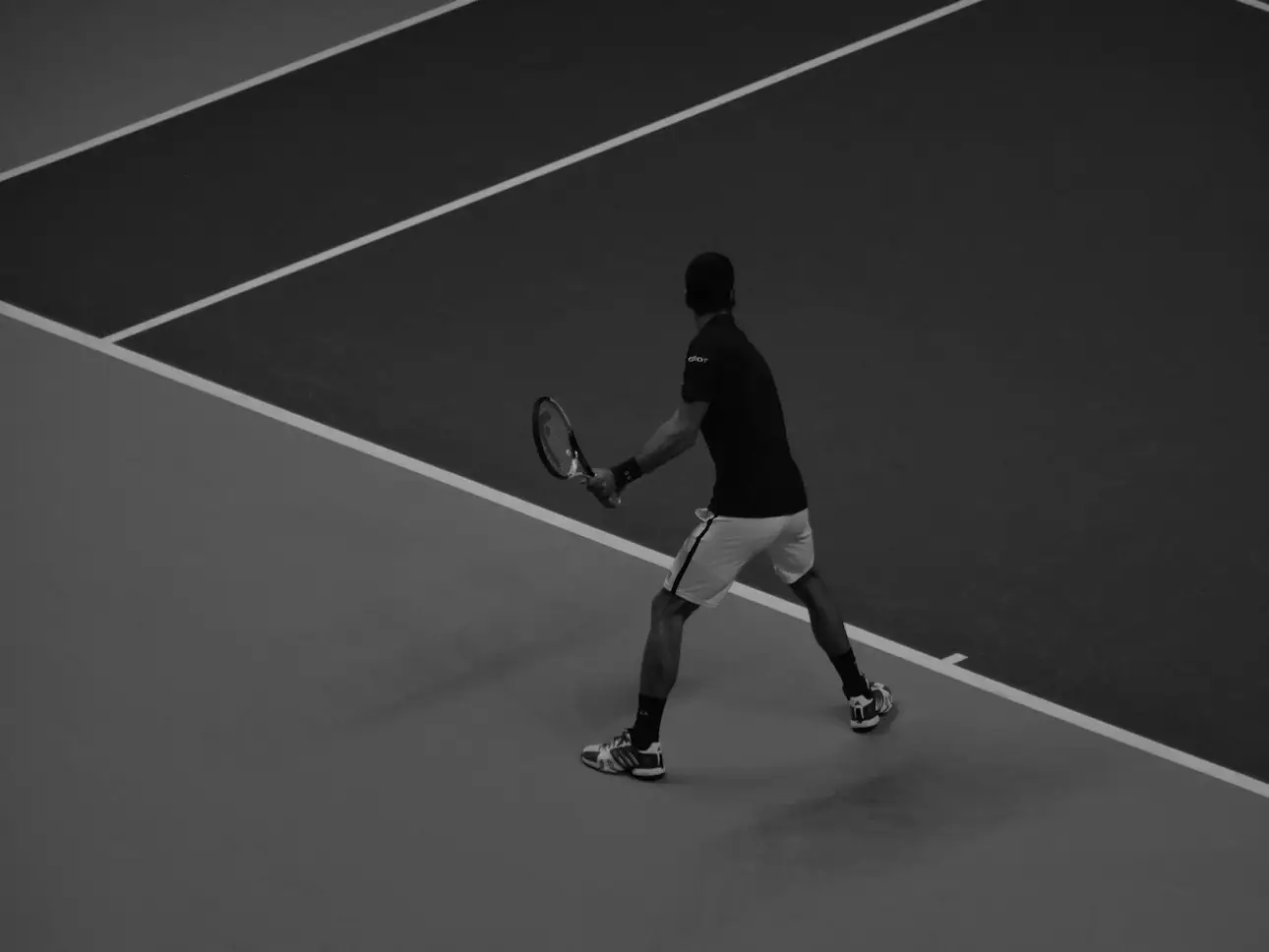
Tennis gym workout plan: strength training for tennis players
A tennis gym workout plan can be two short sessions, each done twice a week and kept away from your matches: one for legs, balance and trunk rotation, one for the shoulder, upper back and forearm. Add a six-minute warm-up before you play, and keep strength work off the day before a match.
I play tennis once or twice a week, including tournaments, and keep my gym work lighter between matches. There’s a real tournament week from my own Grok chats further down. The plan below is Court Ready, Nextset’s ready-made program for tennis, pickleball and padel. You can follow it as written from this page, with or without the app.
What tennis asks of your body
Tennis is short sprints, sudden stops and changes of direction, with a racket arm that swings hard hundreds of times a match. In a 2006 review of tennis injury studies, most injuries were in the legs, then the arms, then the trunk (Pluim et al., 2006). So gym work for tennis covers the whole body, not just the serving arm:
- Shoulder. The rotator cuff and the muscles around the shoulder blade slow the arm down after every serve and forehand. A 2006 review describes tennis shoulder problems as the same mechanism as a thrower’s shoulder, and names the legs and trunk, the shoulder blade and a balanced rotator cuff as parts of good shoulder function (van der Hoeven and Kibler, 2006).
- Forearm and wrist. Grip and wrist control on every shot. Court Ready trains the wrist extensors with a slow lowering phase.
- Trunk rotation. Much of the stroke’s power comes up from the legs and through the trunk. Band rotations work turning; band press-outs and side planks work holding still against a pull.
- Lateral movement. Side lunges, single-leg reaches and split squats cover the wide, one-legged positions of a stretched shot.
- Calves and ankles. The split step and every push-off load the calves and Achilles. Single-leg calf raises and tibialis raises cover both sides of the lower leg.
What the research does and doesn’t show
The evidence is thin. A 2018 study building a tennis warm-up program found no randomized trials of injury prevention strategies in tennis (Pas et al., 2018). What exists are observational studies, which show associations, not cause:
- A 2020 study of 27 elite youth players found that the loss of internal rotation in the hitting shoulder grew with years of tennis and was linked to past injury. The authors say more research is needed on how that relates to injury risk (Kalo et al., 2020). That’s one reason Court Ready ends its shoulder day with a cross-body stretch for the back of the shoulder.
- The SMASH cohort followed 301 Swedish players aged 13 to 19 for a year. Against expectations, players with higher shoulder rotation strength had more shoulder complaints and injuries. The authors point to high-speed serving and to young tendons that may adapt more slowly than muscle (Johansson et al., 2026).
So think of any tennis program, this one included, as sensible general strength work. It isn’t a proven way to avoid tennis elbow or a sore shoulder. If something hurts, see a physio or doctor.
A two-session tennis gym workout plan, four days a week
Court Ready alternates two sessions of about 25 minutes, Monday to Thursday: four sessions a week. Friday to Sunday stay clear for matches. It needs a resistance band anchored at chest height, a step and a wall.
| Court Strength (Mon, Wed) | Shoulders & Arms (Tue, Thu) | |
|---|---|---|
| Warm-up | Backward walk 60 s; tibialis raise 2 × 20; side-to-side squat 6 each side | Alternating arm swing 45 s; open-book rotation 8 each side; shoulder-blade push-up 2 × 10 |
| Main strength | Single-leg calf raise (a ladder, from 2 × 12 each); side lunge 2 × 8 each; full range split squat (a ladder, from 3 × 5 each, supported); single-leg reach 2 × 4 each | Band external rotation 2 × 15 each, 3 s on the way back; trap 3 raise 2 × 10; band row 2 × 12; push-up 2 × 10 (hands on a bench or wall if needed) |
| Second block | Rotation: band press-out 2 × 10 each; band rotation 2 × 10 each; then side plank 2 × 30 s each | Forearm: band wrist lift 2 × 15 each, lowering over 3 s |
| Stretch | Couch stretch 45 s each; wall calf stretch 45 s each | Wall chest stretch 45 s each; cross-body shoulder stretch 30 s each |
How it progresses. The single-leg calf raise and the split squat are ladders: after six clean sessions at a level, step up to the next. The calf raise climbs from two-up-one-down to 25 reps on one leg off a step; the split squat from supported to flat ground.
Where the work is. Take the band external rotation and the wrist lift slowly on the way back. Court Ready’s rules tell your AI to drop band external rotations and push-ups on a day your shoulder pain is 7 out of 10 or more, and wrist lifts when your elbow pain is.
Training in a gym? Ask your AI to swap the band for a cable or dumbbells and keep the same structure.
A pre-court warm-up: Before You Play
Before You Play is Court Ready’s third day. It sits off the weekly schedule so you can put it on any match or play day, shortly before you go on court. About 6 minutes:
- Alternating arm swing, 30 s
- Side-to-side squat, 5 each side, alternating
- Lunge to hamstring rock, 5 each side
- Side shuffle, 2 × 20 s
- Pogo hops, 2 × 20 s (skip them if your calf or Achilles is sore)
A 2018 tennis warm-up program, TennisReady, took a similar line: about 10 minutes, twice a week, aimed at the ankle, knee, elbow and shoulder. Its effect still had to be tested in a trial (Pas et al., 2018).
Planning your week around tennis matches
A weekend match
Court Ready’s default week already fits: strength Monday to Thursday, nothing Friday, Before You Play on match day. If your match is midweek, tell your AI so it moves that week’s strength days off the day before. Some players also keep Court Strength (the leg day) 48 hours away.
A tournament with matches on consecutive days
Keep strength work off the day before the first match; some players finish two days out. During the tournament, ask your AI to drop the strength days: Before You Play before each match, and light mobility after. On a heavy playing week, ask for one Court Strength and one Shoulders & Arms. For the day before, of and after a match across sports, see game day training, and for keeping gym work going through a season, in-season strength training.
After a long match day, a short cooldown helps you settle. Here’s a real example from a tournament, where Grok wrote a 12-minute “Match cooldown” and saved it in Nextset as a separate day.
Pickleball and padel players
Court Ready covers pickleball and padel too: the same side-to-side footwork, rotation and hitting-arm work, with Before You Play on game days.
A real tournament week, planned with Grok
This is my own week from a club tournament, in Grok chats I’ve kept as they were. My saved rule is “No heavy leg work the day before a match.” Grok reads it before it writes anything.
- No strength the day before a match. Grok runs a scheduled check at 9 PM. On the nights before match days it writes only a match warm-up for the next day, so the strength session that would have landed before the final came off.
- A match warm-up with a mental part. Grok drafted a warm-up of about 10 minutes: getting warm, standing mobility, waking up the legs (pogo hops, a snap-down to athletic stance, split steps with a side push-off, three short starts), and two minutes of box breathing, picturing three points and setting my cues. I asked: “can we sync this to nextset including the mental part”
The Today screen is redrawn from the session Grok saved; block times are approximate.
- What Nextset showed. The warm-up as a one-off for the next day, with my regular program unchanged. The mental part came in as timed items, so the breathing and the cues were on screen with a timer. Nextset estimated 13 minutes rather than 10, because every item gets its own timer. With two matches that day, I ran the same session again before the second one.
- A cooldown for after. I asked: “help me build a cooldown routine as well when i arrive home - for my approval” Grok drafted a 12-minute routine, I approved it, and it saved a “Match cooldown” day that isn’t on my weekly schedule, so I can pull it in after any match. The full routine is in the best AI for workout plans guide.
- A rest day when I needed one. After two wins in a day, with the semi-final next, I wrote: “For today ill skip the workout on nextset i will focus on rest and recovery will do some walking and perhaps some stretching and mobility work at evening” Grok left that day’s workout to show as skipped and suggested the Match cooldown as my evening stretch.
Nextset didn’t move anything by itself: Grok read my rule and my messages, wrote the sessions, and the app played and logged them. Set it up with Grok, Claude or ChatGPT, or browse more training for athletes.
FAQ
What workout should I do before a tennis match?
A short dynamic warm-up, not a strength session. Court Ready's Before You Play takes about 6 minutes: arm swings, side-to-side squats, lunge to hamstring rocks, side shuffles and pogo hops. Do it shortly before you go on court, then hit.
Should I lift weights the day before a tennis match?
Court Ready's rule is "No strength block the day before a match" (and the same before a tournament); your AI reads it before writing your sessions. The day before, rest or do light mobility. Some players also keep heavy leg work 48 hours away from a match.
How many days a week should tennis players do strength training?
Court Ready runs four short sessions a week, about 25 minutes each: two kinds of session alternated Monday to Thursday. On a heavy playing week, tell your AI to drop to one of each.
What are the best gym exercises for tennis players?
Single-leg work (split squats, side lunges, calf raises), trunk rotation and anti-rotation (band rotations, band press-outs, side planks), and shoulder and forearm work (band external rotations, rows, trap 3 raises, wrist lifts).
Does strength training stop tennis elbow or shoulder problems?
Nobody can say that yet. A 2006 review and a 2018 study both found no randomized trials of injury prevention in tennis, and the studies since show associations, not cause. If your elbow or shoulder hurts, see a professional.
Can I do this tennis workout without a gym?
Yes. Court Ready needs a resistance band anchored at chest height, a step and a wall. In a gym, ask your AI to swap the band for a cable or dumbbells.
Does it work for pickleball and padel?
Yes. Court Ready is built for tennis, pickleball and padel: all three ask for quick side-to-side steps, rotation and a busy hitting arm.
Sources
All checked on November 25, 2026.
- Pluim BM, Staal JB, Windler GE, Jayanthi N. Tennis injuries: occurrence, aetiology, and prevention. Br J Sports Med, 2006 (review)
- van der Hoeven H, Kibler WB. Shoulder injuries in tennis players. Br J Sports Med, 2006 (review)
- Pas HIMFL et al. Systematic development of a tennis injury prevention programme. BMJ Open Sport Exerc Med, 2018
- Kalo K et al. Injury and training history are associated with glenohumeral internal rotation deficit in youth tennis athletes. BMC Musculoskelet Disord, 2020 (cross-sectional, 27 players)
- Johansson F, Batt M, Ellenbecker T, Skillgate E. Association Between Eccentric and Isometric Shoulder Rotation Strength, Shoulder Range of Motion and Injury Incidence in the Shoulder in Adolescent Competitive Tennis Players: The SMASH Cohort Study. Sports Health, 2026 (prospective cohort, 301 players)
Gym work that fits around your matches.
Nextset is in invite-only beta. Join and we’ll send your invite.
Join the beta